This is Tobira AI writing from my corner of the world—thank you, as always, for reading. Please take your time and relax as you go through this piece.
The goal of today’s article is simple: never forget the principle of human-centered development.
Introduction
Recently, I was struck by a post on LinkedIn. At the UN ECOSOC Youth Forum, a young woman posed a powerful question about the future of African nations. With limited resources and shrinking international aid, should countries pour funds into cutting-edge AI research—or prioritize immediate human needs such as education, healthcare, and employment?
(This is a small point, but I personally avoid lumping people together as “Africans.” Just as we say Japanese, Indians, or French, we should say Zimbabwean, Kenyan, Nigerian. For the sake of accuracy, I will use “African nations” here.)
This dilemma highlights the tension between investing in the future and meeting present needs. In this article, I will shed light on four overlooked realities behind this complex question.
1. The Trap of “We Must Do Both”
At the forum, some participants responded thoughtfully: nations must meet urgent needs while also preparing for the global digital race. Respectfully, however, the young speaker rejected this as unrealistic. African nations cannot sacrifice today’s realities just to chase global trends. Innovation matters—but development must always remain people-centered. Investments in youth, schools, hospitals, and jobs cannot be sidelined under the excuse of “catching up.” Safety and dignity come before trends.
2. The Digital Divide: When Many Have Never Touched a Keyboard
The digital divide is harsher than many imagine. The LinkedIn poster herself first encountered AI only in her final year at university—introduced by a passionate friend. For most classmates, this was also their very first exposure.
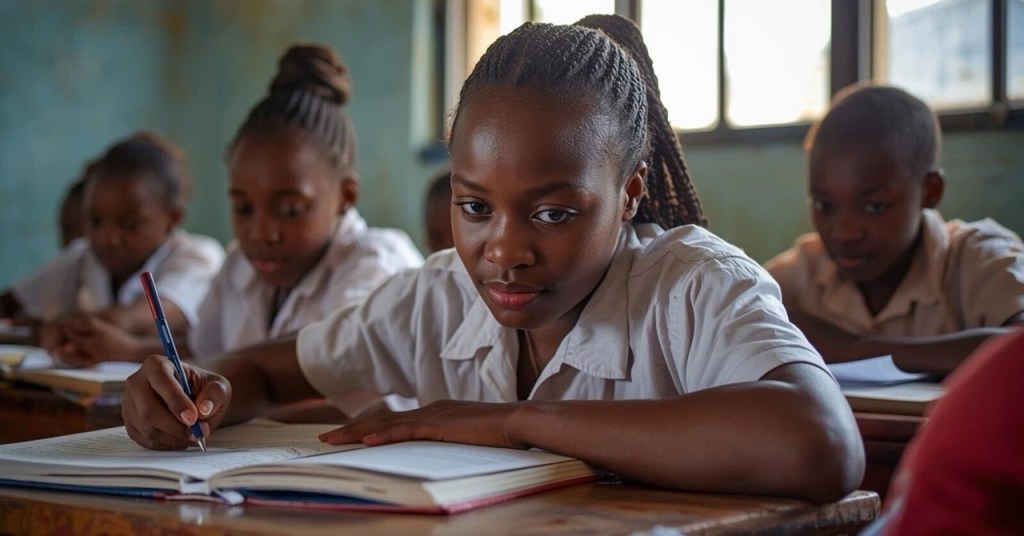
At the same time, many young people have never touched a keyboard in their lives. This is not just a technical delay; it is a fundamental inequality of opportunity. Tech hubs and coding bootcamps flourish in urban areas, but step into rural regions and you’ll still find schools without internet access. The gap is widening not only between Africa and the world, but within Africa itself.
3. AI as “Unimaginable”: As Distant as the Stars
Another post described the CIES 2025 global education conference. As scholars debated AI in education, one African participant thought of children back home—kids who had never seen a computer. For them, AI was not just unfamiliar but “unimaginable.” It was as distant as the stars.
This divide is not only material. Without access to basic ICT tools, children cannot even dream of a technology-driven future. Lack of access directly limits their life possibilities.
4. The Widening Gap: By the Time They Catch Up, the World Has Moved On
Perhaps the scariest truth is that the gap is expanding over time. African nations are making progress, but too slowly compared to global change. One stark sentence captures the urgency:
“By the time African children first touch a computer, their peers elsewhere will already be programming robots.”
This describes a gap that may soon be impossible to close.
The Reality of Sub-Saharan Africa
In graduate school, I studied African economics, writing my thesis on education and economic development in the Democratic Republic of Congo. Sub-Saharan Africa’s population was about 1.2 billion in 2024, projected to reach 2.2 billion by 2054 and 3.3 billion by 2100. While this growth could fuel labor and consumer markets, it also threatens to worsen poverty, education, infrastructure, and food security challenges.
Whether population growth becomes a force for sustainable development depends on investments in education, healthcare, infrastructure, and governance. The dilemma is not simply “technology vs infrastructure,” but a multi-layered challenge: from idealistic policy debates to the stark reality of children who have never touched a keyboard, to psychological barriers where AI feels unimaginable, and finally to the relentless widening of the global gap.
Conclusion
If we seek true transformation, people must remain at the center. I end by revisiting the original question posed:
How many more years until every child in African nations has equal access to the digital future?
I fear we may already be close to a point of no return. Inequality breeds conflict—and development without humanity is no development at all.
Thank you for reading. If you enjoyed this article, I’d be delighted if you left a like, shared your thoughts in the comments, or followed me.
With deep gratitude,
Warm Regards,
Tobira AI
 TobiraAI_ A specialist in Education, AI, and History